FOR 61 YEARS, ONE FAMILY HAS QUIETLY CONTROLLED THE METAL INSIDE AMERICA'S WARSHIPS!
A new federal law is about to shut China out of America's arsenal…
THE END OF THE INVISIBLE EMPIRE
The Pentagon is already funding the American alternative.
And the race to replace the empire has begun.
Wall Street legend Dylan Jovine reveals the one stock at the epicenter that could surge 1,000% over the next 12 months.
Dear Friend,
For 61 years, one family has controlled 77% of the world's supply of a metal most Americans have never heard of.
I'm not going to tell you their name.
Not yet.

They live in São Paulo.
They're worth $28 billion.
They own a bank with half a trillion dollars in assets.
And they control a private company that has never appeared on any stock exchange, anywhere in the world.
A company that produces the metal America's bridges, pipelines, jet engines and warships are built with.
And you never knew they existed.
Let me put that 77% in perspective.
Gold is mined across 40 countries on six continents.
The largest gold mining corporation on Earth controls 6% of global supply.
The largest gold-producing country in the world — China — controls 10%.
OPEC — the oil cartel that brought the Western world to its knees in 1973 — is 11 nations working together.
They pump 31% of the world's crude oil.
One family in South America controls 77% of this metal.
Not a cartel. Not a country. Not a corporation.
A family.
77%
of the world's supply — controlled by one family
$28 Billion / 61 Years / Zero Public Shares
In 2016, Jair Bolsonaro stood at the mine and called it more important than petroleum. Brazil elected him president 2 years later.
Washington lists it as a mineral critical to America's national security.
And the United States produces exactly zero.
One Family vs. The World's Biggest Resource Powers
"Not a cartel. A family."
They didn't hold that grip by accident.
This metal has never been traded on a single commodity exchange. Not the London Metal Exchange. Not COMEX. Not any futures market, anywhere.
Every ounce is sold through private contracts — prices set behind closed doors, between the family and their buyers.
No public market. No price transparency. No competitor at its scale.
One family walked in early and locked the vault from the inside.
61 years.
$28 billion in family wealth.
Without ever issuing a single share to the public.
That was the arrangement.
Now America is moving to break it.
I've been on Wall Street for more than 30 years.
I've rarely seen a setup like this.
Because there is exactly one American company positioned to break America free from this family's grip.
14 full-time employees.
A cornfield in the American heartland.
And a CEO who spent 7 years inside the empire before turning to the American alternative.
An alternative that has already won money from the Pentagon and a research partnership with Lockheed Martin's most advanced weapons division. Its financing application is now under review at the Export-Import Bank of the United States.
In August, that company released a new feasibility study on its mine.
Its engineers put the mine's value at $4.1 billion, before taxes.
The stock market values the entire company at about $506 million.
Both numbers are on file with the SEC.
Before I show you the company — and why I believe its stock could surge 1,000% over the next 12 months — you need to see what's converging.
Because a clock is ticking that most investors don't know exists. It runs out on January 1st.
Who Am I?
My name is Dylan Jovine.
I've spent more than 30 years on Wall Street — and the last 8 years running an independent investment research firm called Behind the Markets.
I don't work for Goldman Sachs.
I don't answer to JPMorgan.
I have no fund managers looking over my shoulder and no investment banking clients to protect.
My readers are my only shareholders.
More than 500,000 of them, in 28 countries.
I'm telling you that because what I'm about to put in front of you demands a certain level of credibility.
And I'd rather show you my receipts than ask you to take my word for it.
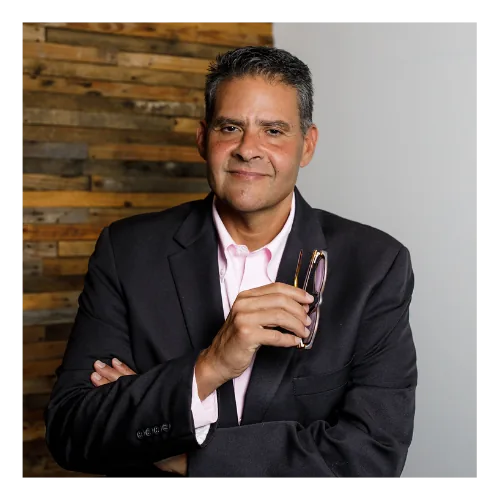
Dylan Jovine
Founder, Behind the Markets
30+ Years on Wall Street | 500,000+ Readers in 28 Countries
In 2007 — a full year before Lehman Brothers collapsed — I published a warning in The Tycoon Report telling my readers the financial system was heading for a crisis.
I was called alarmist.
Then Bear Stearns went under.
Then Lehman.
Then the entire global economy.
When the dust settled, I called the rebound.
Readers who followed that call locked in gains of 459% on AutoNation, 646% on American Express and 700% on Starbucks.
In March 2020, when COVID shut the world down and the market was in free fall, I told my readers the bottom was in.
Buy.
Almost to the day.
Readers who bought stocks like DraftKings and Scotts Miracle-Gro locked in gains as high as 202%.
I'm not telling you this to impress you.
I'm telling you because what I'm about to present is the most important call I've made since that COVID bottom — and I need you to understand that I don't say that lightly.
Here's my actual scorecard.
Not a highlight reel — the real numbers, winners and losers included.
A 75.2% win rate on all closed recommendations through December 31, 2025.
A 35.9% average return across winners and losers.
And along the way, I recommended IonQ, Palantir and Rocket Lab before they ran 431%, 2,712% and 3,800%.
Dylan Jovine — Actual Scorecard
75.2%
Win Rate
35.9%
Average Return
Starbucks
700%
American Express
646%
AutoNation
459%
Rocket Lab
3,800%
Palantir
2,712%
IonQ
431%
Past performance does not guarantee future results.
Those wins were just the warm-up.
Now I'm staring at a 1,000% window.
I believe I'm watching the setup of a lifetime.
Right now.
In a place most investors aren't looking.
Let's start with who's already in.
FOLLOW THE MONEY
When a family worth $28 billion — who could invest in anything on Earth — puts the bulk of their fortune into a single metal, that tells you something the market hasn't figured out yet.
Their name is Moreira Salles. And they don't just own a mine.
They manage their wealth through a family office that oversees $9.6 billion in assets.
They control Itaú Unibanco — Latin America's largest bank, with over half a trillion in assets.
And yet the centerpiece of their fortune, the asset they've held and expanded for six decades, is a single mining operation in Araxá, Brazil — producing the metal you've never heard of.
They're doubling down.
Their company, CBMM, has committed to investments that could double sales volume by 2030.
They know what's coming.
Now look at who else has moved.
In 2011, five of China's largest state-owned companies paid $1.95 billion for just 15% of CBMM.
Not a minority stake in a public company — a sliver of a private one, with initially zero governance rights and zero path to control.
Why would a sovereign government pay that premium?
Because they weren't buying equity.
They were buying insurance.
The same year, a Japanese-Korean joint venture took another 15% of CBMM.
Two of the world's most sophisticated industrial economies locked in long-term supply contracts.
They're not speculating.
They're protecting their supply chains.
The Pentagon has already put money directly into a tiny mining company in the American heartland.
Lockheed Martin's Skunk Works — the division that built the SR-71 Blackbird and the F-117 stealth fighter — signed a research partnership with this same company.
When Skunk Works partners with a pre-revenue mining startup, that isn't charity.
That's strategic.
And on February 2, 2026, the White House and EXIM launched "Project Vault" — a $12 billion Strategic Critical Minerals Reserve.
The seed capital: $1.67 billion from General Motors, Stellantis, Boeing, Corning, GE Vernova, and Google.
Boeing.
Google.
GM.
These companies don't put up $1.67 billion in seed capital for a policy exercise.
They do it because their supply chains are at risk.
EXIM's President and Chairman, John Jovanovic, appeared on video at a Nebraska town hall in December 2025 and called the Nebraska mine "exactly the type of opportunity EXIM was always designed to support."
Nebraska Governor Jim Pillen called it "one of the greatest deposits in the United States of America."
Nebraska's U.S. Senators, Deb Fischer and Pete Ricketts, have spoken publicly in support.
The smart money isn't debating whether this metal matters.
That argument ended when China wrote a $1.95 billion check.
The only debate left is where the profits go.
FOLLOW THE MONEY
$1.95B
CHINA
15%
JAPAN-KOREA
$12B
PROJECT VAULT
Up to $10M
PENTAGON (DPA)
All roads lead to one metal. One American company. Under $5.
Now let me show you what's coming.
The Empire
To understand what's converging, you first need to understand what exists.
But before I get into the geopolitics — let me show you something closer to home.
Let me show you the name of the metal.
It's called niobium.
You've never heard of it.
Neither has almost anyone you know.
And that's exactly how one family has controlled 77% of the world's supply for 61 years — in plain sight, without anyone noticing.
Now let me show you why you should have noticed a long time ago.
The Metal You've Trusted Your Whole Life
You probably think niobium has nothing to do with you.
You'd be wrong.
The last time you got an MRI?
Niobium was in the room.
Nearly every MRI scanner runs on niobium-titanium magnet wire.
More than 40 million MRI scans a year in the U.S. alone.
The machine doesn't work without it.
And the family that controls 77% of the supply sets the price.
Not the market.
Not competition.
One family.
The bridge you drove across this morning?
Niobium-strengthened steel.
It's in bridges built across America since the 1970s.
And in the pipelines that carry natural gas to your home.
Adding just a trace of niobium to steel can double its strength.
The car you're sitting in?
Roughly 300 grams of niobium in the frame.
It reduces vehicle weight by 440 pounds while increasing crash resistance.
Every modern auto manufacturer uses it.
Naval vessels.
Jet engines.
Rocket nozzles.
Components where failure means American lives lost — built with a metal America imports 100% of, from a family that answers to nobody.
The pacemaker keeping someone you love alive?
Niobium.
One of the few metals the human body doesn't reject.
Now let me show you who they are.
And why their grip on America is about to end.
How One Family Cornered a Metal No One Knew Mattered
CBMM — Companhia Brasileira de Metalurgia e Mineração.
Based in Araxá, a quiet mining town in the Brazilian state of Minas Gerais.
The Moreira Salles dynasty acquired control in 1965 — when the metal had no commercial market and nobody else wanted it.
By 2006, they'd bought out every outside shareholder and consolidated 100% ownership.
Today, CBMM generates $1.57 billion in annual revenue — keeping roughly 42 cents of every dollar as operating profit.
They control every step from the mine to the factory floor.
They don't sell raw ore.
They sell only processed products — and they have enough reserves to supply global demand for 200 years.
Their own head of technology once said publicly: their biggest competitor isn't another niobium producer. There aren't any — not at scale. Their biggest competitor is steel made without niobium.
That's who controls the supply. Now let me show you how deep the danger runs.
The Infiltration
When Beijing paid $1.95 billion for 15% of CBMM, it knew what it was buying.
CITIC, one of the five Chinese companies, has been CBMM's exclusive Chinese distributor for more than 30 years.
They control an estimated 80% of China's domestic niobium market.
The relationship isn't new.
What's new is the ownership.
And they didn't stop there.
In 2025, a Chinese state-owned metals group — China Nonferrous Metal Mining, known as CNMC — closed a $340 million deal for the Pitinga mine in the Amazon basin.
Production: 1,100 to 1,200 tonnes of niobium per year.
Brazilian senators went public with warnings.
They called it a threat to national sovereignty.
Meanwhile, the United States of America has produced exactly zero pounds of niobium since 1959.
That's the backdrop.
Now let me show you what just turned this into a five-alarm emergency.
The FY2026 defense budget is approaching $1 trillion. The President has proposed $1.5 trillion for FY2027 — the largest defense budget in American history. An increase of about 50% in a single year.
That money is building warships, fighter jets, missiles, drones, radar installations, and missile defense systems. Every one of them is built with critical metals America can't supply on its own.
And on top of that, the $151 billion SHIELD program — Golden Dome — is designed to build a layered missile defense shield over the American homeland.
What Happens on January 1st
Now Washington is moving.
In March 2025, the President invoked the Defense Production Act — wartime powers — to boost American mineral production.
Executive Order 14241.
The same authority used to mobilize manufacturing during Korea and the Cold War.
Then Congress acted.
The One Big Beautiful Bill Act — signed July 4, 2025 — allocated $7.5 billion specifically for critical minerals development.
The Pentagon?
They're stockpiling niobium directly.
In 2026, the Pentagon's Defense Logistics Agency agreed to buy up to $160 million of ferroniobium for America's stockpile.
From the family's company.
That's how deep the dependence runs.
Then, in July, President Trump signed Executive Order 14415.
Its first deadline hits on January 1st.
That's the day the Pentagon stops handing out the routine waivers its contractors have used to keep buying banned materials from China.
The same day, the federal law behind those waivers gets tougher.
From January 1st, the Pentagon can't buy the rare-earth magnets inside its weapons if the metal in them was mined, refined or separated in China.
Those magnets steer missiles. They drive the motors in drones and fighter jets.
And China refines about 91% of the rare earths inside those magnets, according to the International Energy Agency.
Niobium isn't covered by that law.
It doesn't need to be.
The one American mine being developed to end the family's grip on niobium is designed to produce those exact rare earths, too.
And the hunt for American supply begins.
That's the clock most investors don't know is ticking.
And it's why I believe this stock could surge 1,000% over the next 12 months.
The World Is Already Moving
This isn't a thesis anymore.
The evidence is accumulating in real time.
CBMM has committed hundreds of millions to expanding into battery materials, advanced alloys for EV and aerospace markets, and next-generation niobium products — with plans to grow battery materials from 5% to 25% of revenue by 2030.
In June 2024, Toshiba, Sojitz, and CBMM unveiled the world's first electric bus powered by niobium batteries — batteries that recharge to 80% in 10 minutes and last 10 times longer than the battery in your phone.
CBMM sees the future — and they're spending hundreds of millions to own it.
But they can't give America its own source.
Every dollar CBMM spends proving niobium's future applications makes the only American niobium deposit more valuable.
And the rest of the world is waking up.
South Korea is stockpiling it.
The European Union gets 82% of its niobium from Brazil. It has named niobium a critical raw material.
Country after country is scrambling to lock up supply — and the company behind America's only niobium mine in development still trades at a fraction of what its own study says the mine is worth.
The only question is whether America will have a domestic source when the next supply shock hits — or whether we'll be at the mercy of one family in Brazil and a state-owned metals group in Beijing.
There is exactly one company on American soil that can break that dependency.
$415 million in cash. Binding purchase contracts already signed.
A cornfield in Nebraska.
And a CEO who spent 7 years inside the empire.
Now let me show you.
THE COMPANY THAT BREAKS THE EMPIRE
A cornfield in rural Nebraska.
A town so small it barely has a name.
An office with 14 full-time employees.
That's where you'll find the company I believe could become the most important critical mineral producer in the United States.
They're sitting on the highest-grade niobium deposit currently under development in North America — which means less rock to move, lower costs per pound, and higher profit margins when production begins.
But here's what makes this company unlike almost anything I've come across in 30 years.
They don't just have niobium in the ground.
They have scandium — a rare earth metal the Pentagon has flagged as critical for next-generation fighter jets and lightweight military vehicles.
And titanium.
And three of the rare earths that go into the magnets inside America's missiles.
Plus two more rare-earth concentrates.
Eight critical-mineral products.
One underground orebody.
Every one of them is on Washington's official list of critical minerals.
Its engineers value that mine at $4.1 billion.
The entire company — its market cap, the total value the stock market currently puts on it — is about $506 million.
They're sitting on $415 million in cash.
And their long-term debt is zero.
That $4.1 billion already subtracts the $1.85 billion it will cost to build the mine.
The market is pricing this mine as if it barely exists.
That's like finding a house appraised at $4.1 million, listed for $506,000.
You don't need the house to appreciate.
You just need the market to notice the price tag is wrong.
The gap between what the market sees and what the deposit is worth is the opportunity.
MINE VALUE (STUDY)
$4.1B
MARKET CAP
~$506M
$415M cash. Zero long-term debt.
A 712% gain if the stock reaches its own study's value
Study value is before taxes and already subtracts the $1.85B cost to build the mine. Not guaranteed.
Why hasn't the market noticed? Because Wall Street wants to see who pays to build the mine.
Now look at who's lining up behind it.
The Pentagon agreed to pay them up to $10 million under the Defense Production Act. It has already sent $8.1 million.
That's not a loan.
That's the Department of Defense putting money directly into this company.
Lockheed Martin's Skunk Works is developing defense technology with them under a Pentagon-funded program. And in August, Lockheed Martin signed a memorandum of understanding with the company.
The Export-Import Bank of the United States is reviewing the company's application for project financing.
And 75% of their planned ferroniobium is already sold under binding contracts — locked in before they've produced a single ounce.
I want you to sit with that for a second.
The steel industry is already lined up.
The Pentagon is already in.
Lockheed Martin has already signed on.
And the stock trades for under $5.
The Man Who Sat Inside the Empire
Here's where this gets personal.
The CEO of this company spent more than 7 years as the shareholder representative at CBMM — the very company that controls 77% of the world's niobium supply.
The Moreira Salles family's empire.
He was there during the buyout.
He watched the family purchase his company's stake and consolidate control — from 55% to 100% ownership.
He sat in the rooms.
He saw the numbers.
He understood, better than almost anyone outside the family, exactly how valuable that monopoly was.
When that deal closed, his seat at the table was gone.
So he went to work on the American alternative.
The deposit he's now developing?
It was originally explored by the same company whose stake the family bought out.
He didn't stumble onto this opportunity by accident.
He's been circling it for decades.
His career tells the story: Unocal.
Molycorp.
Largo Resources.
Each one a step closer to the same destination — a domestic source of the metal that one family has controlled for 61 years.
Think about that.
A man who spent 7 years inside the most powerful critical mineral monopoly on Earth chose to bet his career on a cornfield in Nebraska.
What does he know that we don't?
The Insider Signal
And he's not alone.
His chief communications officer — the man who serves as the company's public face in Washington — is a former U.S. Senate chief of staff.
He served as White House Director of Communications for the Energy Policy Development Group, the energy task force Vice President Dick Cheney chaired.
Georgetown honors graduate.
A man with that résumé could work anywhere in Washington.
A lobbying firm on K Street, where the most influential lobbyists operate less than a mile from The White House.
Defense contractors.
Think tanks.
Political consulting.
Instead, he joined a tiny mining company in the middle of nowhere.
When a former White House official joins a company with a handful of employees and zero revenue... you pay attention.
Because people like that don't make career moves based on hope.
They make them on conviction.
Someone Knows Something
Now look at what the money is doing.
Between July 2025 and February 2026, investors put $375 million into this company.
Not a trickle.
A flood.
And in July, BlackRock, the largest money manager on Earth, reported owning 6.2% of the company, up from 4.8% at the end of March.
On December 15, 2025, one board member put $276,000 of his own cash into the company's stock.
Not a stock grant.
Not restricted shares handed to him as compensation.
His own cash.
Paid to exercise his warrants and take the shares.
The CEO did the same thing that day, with about $166,000 of his own.
No insider has reported selling a single share since the start of 2025.
Not one.
In a company with zero revenue and a stock trading under $5, the people who know the most — the CEO who sat inside the empire, the former White House official, the board — aren't selling.
Three of them put in fresh cash on the same day.
When insiders at a pre-revenue mining company are writing six-figure personal checks while the stock trades for the price of a sandwich, someone knows something.
Every word of this is public record.
It's in the company's SEC filings and insider transaction reports.
The EXIM Chairman's video from the Nebraska town hall is public, too.
This isn't a thesis that requires you to take my word for it.
The evidence is public.
It's sitting there, in plain sight, waiting for people to connect the dots.
Most won't.
That's the opportunity.
HISTORICAL PROOF: THIS HAS HAPPENED BEFORE
Let me show you what happens when Washington steps in behind an American source of a critical metal.
In July 2025, the Pentagon became the largest shareholder in MP Materials, owner of the only working rare-earth mine in America.
Over the next 3 months, its stock climbed 228%.
In October 2025, Washington took a 10% stake in Trilogy Metals, which is developing a copper and critical-minerals district in Alaska.
Trilogy hasn't mined an ounce. Its stock jumped 211% in a single day. Within about a week, it was up 407%.
And in December 2024, China banned exports of antimony to the United States. The Pentagon needs it for ammunition.
So the Pentagon turned to United States Antimony, the company that owns North America's only two antimony smelters, with a sole-source contract worth up to $245 million.
From the day before China's ban to its high the following October, the stock climbed 2,361%.
That's enough to turn $5,000 into more than $123,000.
Sound familiar?
Now here's what separates niobium from every one of those: one company controls most of it.
Rare earths had MP Materials plus the entire Chinese supply chain.
Niobium?
Three mines on Earth produce virtually all of it.
One family controls 77%.
America produces zero.
So when I say this stock could surge 1,000%, I'm not reaching.
If this company does just half of what United States Antimony did, that's a gain of more than 1,000%.
The pattern — the only American source, Washington's backing, a supply squeeze — is the same pattern.
THE PATTERN: Washington Backs an American Source
Rare Earths
MP Materials
Pentagon became largest shareholder (Jul 2025)
+228%
Over the next 3 months
Copper & Critical Minerals
Trilogy Metals
Washington took a 10% stake (Oct 2025)
+407%
Within about a week (+211% in one day)
Antimony
United States Antimony
Pentagon sole-source contract after China's ban (Dec 2024)
+2,361%
To its high the following October
| Metal | Company | Washington's Move | Gain |
|---|---|---|---|
| Rare Earths | MP Materials | Pentagon became largest shareholder (Jul 2025) | +228% Over the next 3 months |
| Copper & Critical Minerals | Trilogy Metals | Washington took a 10% stake (Oct 2025) | +407% Within about a week (+211% in one day) |
| Antimony | United States Antimony | Pentagon sole-source contract after China's ban (Dec 2024) | +2,361% To its high the following October |
Pattern: the only American source + Washington's backing + a supply squeeze.
Niobium: one family controls 77%. America produces zero.
DISCLAIMER: Past performance does not guarantee future results.
And this time, there's a hard deadline. January 1st.
A mentor at Lazard Frères told me something I've carried for 30 years:
"Don't watch the game.
Watch the field."
That's what I've been doing for the last 18 months with niobium.
While everyone else watched AI stocks, I was watching the field — the physical metals America's weapons and infrastructure are built from.
The same discipline behind my 75.2% win rate is the discipline that led me here.
And that same discipline is exactly how I found the company at the center of the Invisible Empire story.
THE MATH FROM HERE
Let me show you what the math looks like.
The company's own feasibility study values the mine at $4.1 billion, before taxes.
The stock market values the whole company at about $506 million.
If the stock simply reaches the value in its own study, that's a 712% gain.
My target is 1,000% over the next 12 months.
The study's value gets you most of the way there. If the market starts paying a premium for American supply, the rest follows.
At 1,000%, a $5,000 stake becomes $55,000.
Now look at what waiting costs.
Say you wait until after January 1st, and the stock doubles before you buy.
The same target price would leave the same $5,000 at $27,500.
Same stock. Same $5,000. A $27,500 difference.
That's a paid-off car you gave up just by waiting.
You're not betting on a moonshot.
You're buying a mine at a fraction of the value in its own filing, and waiting for the market to notice.
That's not speculation. That's arithmetic.
THE MATH FROM HERE
REACHES ITS OWN STUDY VALUE
~$506M market cap → $4.1B study value
712%
DYLAN'S 12-MONTH TARGET
Study value plus a premium for American supply
1,000%
$5,000 → $55,000
IF YOU WAIT
The stock doubles after January 1st before you buy
Same target
$5,000 → $27,500
A $27,500 DIFFERENCEForward-looking estimate. Not guaranteed. Past performance does not guarantee future results. This company could go to zero.
The timeline matters.
January 1, 2027: the Pentagon's waivers end.
I believe this is a 6-to-12-month catalyst window.
Not a 5-year thesis.
The government has put a date on the calendar.
The clock is running.
YOUR QUESTIONS ANSWERED
I know you're smart. You've seen plenty of "next big thing" stories come and go.
So let me answer the questions I expect are on your mind right now.
"Niobium is too niche — the whole market is only a few billion dollars a year."
The uranium market was smaller than that in 2003 before the repricing.
Lithium was a rounding error before Tesla.
Every "niche" metal that becomes strategic reprices violently.
"The monopoly is unbreakable — nobody can compete with a company that has 200 years of reserves."
Nobody needs to outproduce CBMM.
America needs a domestic source.
Period.
This company doesn't need to outsell the empire.
It needs to exist alongside it — the way MP Materials exists alongside Chinese rare earth producers.
The government doesn't need to destroy the family's business.
It needs to end America's dependence on it — with an insurance policy on American soil.
"This company is too small, too risky — a pre-revenue mine with a handful of employees and a cornfield."
The point of getting in early is that it's uncomfortable.
If it were comfortable, everyone would already own it.
"It's a small stock. Will I get stuck in it?"
It trades on the Nasdaq, and some of the biggest institutions on Wall Street already own it.
You can buy it in your IRA or your brokerage account.
"The mine isn't even built. Why would the stock move before it produces anything?"
Because the market doesn't wait for production.
Trilogy Metals hasn't mined an ounce. It jumped 211% in a single day when Washington moved.
The market reprices the deposit first. The mine comes later.
"The government won't follow through."
The President signed an executive order that ends the Pentagon's routine waivers on January 1st.
The Pentagon awarded a Defense Production Act grant.
Project Vault launched with $12 billion, with Boeing, Google and GM among its backers.
At some point, "the government won't follow through" stops being skepticism and starts being denial.
I've weighed every one of these arguments.
I believe the evidence is overwhelming.
Now let me show you exactly how to get positioned.
Imagine you're sitting at your kitchen table 6 months from now.
January 1st has come and gone.
The Pentagon's waivers are gone, and its suppliers are scrambling for American metal.
The EXIM Bank approved the financing.
Construction is underway.
You check your brokerage account.
The position you took today — the one most people dismissed as "too speculative" or "too small" — is up significantly.
You didn't need anyone to tell you.
You saw the convergence.
You acted while the crowd was still asleep.
That's what this moment is about.
The setup is real.
The deadline is real.
And the window is closing.
I've put everything into one report.
The Report
It's called "The Invisible Empire: The One Stock Positioned for the Biggest Monopoly Break in Critical Minerals History."
Inside, you'll find the company name, the ticker symbol, my buy-up-to price, a complete catalyst calendar with every date I'm watching between now and January 1st, my full risk framework, and my exit strategy — when to take profits and when to hold.
Here's what you'll discover inside:
The stock trading under $5, whose own engineers value its mine at $4.1 billion — and why I believe January 1st could start closing that gap.
Why the family that controls 77% of the world's supply of this metal is worth $28 billion — and how one tiny American company could end their grip on America.
What Lockheed Martin's Skunk Works is building with this company — and what it signals about the Pentagon's real plans for this metal.
Why no insider has reported selling a single share since the start of 2025 — and why one director put $276,000 of his own cash into the stock.
I'm giving this report away to you today.
Here's how.
I'm inviting you to join my flagship research service, Behind the Markets.
This is where I publish my best ideas.
It's where I recommended ASML for a 141% gain.
It's where I recommended FormFactor for a 180% gain.
It's where I recommended AMD for a 228% gain.
And it's where I'll be guiding you through the end of the Invisible Empire.
When you join today, you'll get instant access to "The Invisible Empire."
But the stock at the center of this story isn't the only opportunity I've uncovered.
The Bonus Report
Along with the flagship report, you'll also receive a bonus report — free — the moment you join.
Bonus Report: "The Defense Giant Nobody's Connecting to Niobium."
One of the largest defense contractors on Earth builds fighter jets, tankers and missiles for the Pentagon.
And it has a stake in where America's critical metals come from.
Wall Street is pricing this stock for the defense surge. They haven't priced in the critical minerals angle yet.
Inside: the company name, the entry point, and the catalyst I'm watching that could trigger the next leg higher.
Both reports are yours the moment you join.
Here's what membership means.
A full year of Behind the Markets.
Every new recommendation I make, the moment I make it.
Full access to my model portfolio, so you'll see exactly what to buy, when to buy it, and when to sell.
Every portfolio update. Every alert.
It's a complete system.
The Price
Normally, a year of Behind the Markets costs $399.
You won't pay $399.
You won't even pay $99.
Today, a full year with both reports is just $49.
That's 88% off.
Less than a dollar a week.
Less than the cost of a decent steak dinner.
One good trade from this research could pay for a lifetime of subscriptions.
Why $49?
Because I want to reach as many investors as possible before January 1st.
The January 1st deadline doesn't wait.
And I'd rather have 10,000 readers positioned correctly at $49 than 2,000 at $399.
That's not a sales gimmick.
That's math.
Sure, you could spend 40 hours a week doing this yourself.
You could read USGS mineral reports and SEC filings.
You could track executive orders, EXIM Bank reviews and Defense Production Act awards.
Or you could get the company name, the entry point, and the complete exit strategy in a single report — for less than the cost of a steak dinner.
Your 6-Month Ironclad Guarantee

You have 6 months to evaluate everything.
Read the reports.
Study the analysis.
Watch the portfolio.
Follow the catalyst calendar.
If at any point during those 6 months you don't believe Behind the Markets is worth many times what you paid — for any reason, or for no reason at all — every penny back.
No questions.
No hassle.
No hoops.
You keep everything.
The reports.
All of it.
I'm not worried about refunds.
I'm worried about people missing the window.
JANUARY 1, 2027: THE PENTAGON'S WAIVERS END
So let's recap.
For 61 years, one family has controlled the metal inside America's warships.
The Pentagon has already put money into the American alternative.
On January 1st, the law starts forcing the Pentagon's suppliers out of China.
And I've identified the one stock I believe could surge 1,000% as it does.
For just $49, you get:
12 months of Behind the Markets — every new recommendation, every portfolio update, every alert.
Report #1: "The Invisible Empire" — the company name, the ticker symbol and my buy-up-to price.
Report #2: "The Defense Giant" — the defense contractor Wall Street hasn't tied to the critical minerals story.
Your 6-month Ironclad Guarantee.
You've seen the evidence.
Now you have a choice.
You can close this message.
Go back to whatever you were doing before.
The research will still be here tomorrow.
The deadline will still be approaching.
But the window narrows every single day.
This stock trades for under $5.
It's small enough that a single catalyst — EXIM's approval, a Pentagon contract, a supply deal — could move it significantly in a single session.
And the January 1st deadline arrives either way.
Or you can take 60 seconds — less time than it takes to brew a cup of coffee — and position yourself on the right side of the biggest convergence I've seen in 30 years of doing this.
$49.
Two reports.
A 6-month guarantee.
One stock.
One deadline.
One 1,000% target.

You already know what it feels like to watch an opportunity go by.
MP Materials.
Trilogy Metals.
United States Antimony.
The pattern is always the same.
By the time the crowd figures out what's happening, the 228% gain is a headline.
The 407% gain is a case study.
The 2,361% gain is a legend people talk about at dinner parties.
Nobody who missed those gains says, "I didn't see it."
They all say the same thing: "I saw it. I just didn't act."
The question was never will this happen?
The question was always will I be early enough?
January 1, 2027.
The deadline is set.
The company is real.
The forces are converging.
The President wants $1.5 trillion for defense.
And the one metal that strengthens every warship, every missile, and every fighter jet in America's arsenal is controlled by a family in Brazil.
January 1st is coming — fast.
Click the button below.
It takes you to a secure order page where you can review everything, including the details of your guarantee.
This message won't be here forever.
The Buck Stops Here,